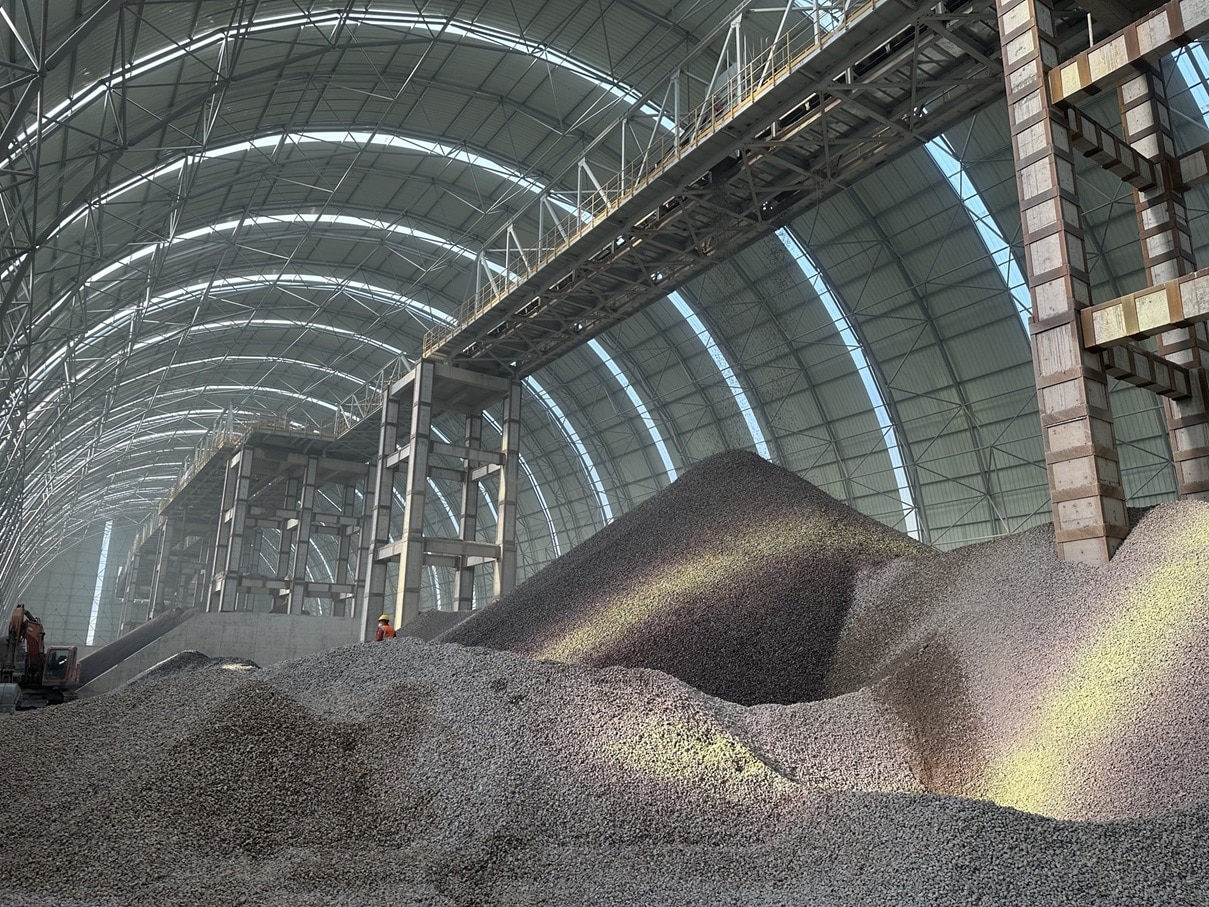
Highways, bridges, airports, skyscrapers, and other modern infrastructure all depend on aggregate, a material that is often disregarded. Numerous building projects are built on aggregates, which include recyclable materials, sand, gravel, and crushed stone. Their manufacturing technique is essential to guaranteeing robust, long-lasting, and sustainable infrastructure. Understanding how is aggregate produced explains not just the technical elements of the process but also why it is essential to the construction of the world around us.
How Does Aggregate Get Made?
Aggregate is produced in a number of steps, with the intention of removing, treating, and preparing the material for use in building. The main stages are as follows; however, techniques may differ depending on the kind of aggregate and its intended use:
- Extraction: Aggregates are dredged from riverbeds, mined from quarries, or pitted. Drilling, blasting, or excavation are used to retrieve large amounts of rock or raw material.
- Crushing: To reduce the raw material to smaller, easier-to-handle bits, it is fed into crushers. At this point, a jaw crusher or stone crusher is often used.
- Screening: Crushed material is run through screens to divide it into various sizes. Larger stones, medium gravel, and fine sand are all classified according to their intended usage.
- Washing: Aggregates may be washed to remove contaminants like clay, silt, or dust, guaranteeing improved bonding and greater quality in building applications.
- Transport and Stockpiling: Following processing, aggregates are kept in stockpiles until they are transported to building sites.
This detailed description of how aggregate is produced demonstrates the accuracy and attention to detail required to guarantee that the materials fulfill exacting quality requirements.
Road And Highway Foundations
Road construction is one of the most significant uses for aggregates. For stability and drainage, foundation layers of crushed stone and gravel are placed below concrete and asphalt. Roads would be susceptible to erosion, cracking, and collapse in the absence of this base.
The quality of the aggregates used has a significant impact on the robustness and longevity of road networks. Longer-lasting roadways with lower maintenance costs and increased driving safety are guaranteed by properly prepared aggregates.
Crucial For Asphalt And Concrete
Both asphalt and concrete, the fundamental components of contemporary infrastructure, are made of aggregates. Usually, 90–95% of asphalt mixes and 60–75% of concrete volume are composed of aggregates.
Aggregates provide concrete with its compressive strength, decrease shrinkage, and increase durability. They provide stability and resistance to skids in asphalt. These materials wouldn’t be able to fulfill the strict requirements needed for contemporary infrastructure without precisely made aggregates.
Supporting Skyscrapers, Bridges, And Airports
In addition to roads, aggregates are essential for building buildings, bridges, tunnels, and airports. Aggregates provide the strength they need to support enormous loads and environmental stress. They serve as the foundation for runways at airports that handle large aircraft landings and takeoffs.
Aggregates in concrete provide stability against seismic and wind pressures and sustain vertical loads in skyscrapers. The steady quality of the whole manufacturing process determines how reliable these large-scale initiatives will be.
Recycling And Sustainability In The Production Of Aggregates
The necessity for sustainable methods in aggregate production is growing along with the need for infrastructure. Recycling used asphalt, concrete, and building waste into usable aggregates lessens the effect on the environment and eases the burden on natural resources.
Contractors contribute to a circular economy, eliminate waste, and use less energy by using recycled materials in the manufacturing process.
Aggregate Production’s Future
The future of aggregate production is being shaped by technological developments. Higher efficiency and lower energy usage are guaranteed by automated crushers, sophisticated screening systems, and real-time quality monitoring. Additionally, data-driven solutions aid in production optimization, guaranteeing that aggregates satisfy the changing requirements of green building.
The need for premium aggregates will only rise as cities develop and infrastructure becomes more intricate. The balance between satisfying demand and reducing environmental effects will continue to be supported by innovations in manufacturing techniques.
Conclusion
Although they aren’t usually visible, aggregates constitute the foundation of contemporary infrastructure. They have an indisputable part in everything from the roads we drive to the structures where we live and work. Why aggregate is so important to building and development may be better understood by understanding how it is produced.
Aggregates guarantee the durability of today’s projects while clearing the path for future generations by fusing strength, adaptability, and sustainability. The production of high-quality aggregates will continue to be a key component of advancement as infrastructure needs grow.